
Type: Rabbit IgG
Applications: IHC; WB
ICC=Immunocytochemistry; IF=Immunofluorescence; IHC=Immunohistochemistry; WB=Western blotting; FC=Flow Cytometry; IP=Immunoprecipitation; E=ELISA; NB=Neutralization of Bioactivity; FACS; FM=Fluorescent Micsroscopy; ; FPLC=Fast Protein Liquid Chromatography; GF=Gravity Flow; HPLC=High Performance Liquid Chromatography; TPE=Targeted Protein Expression; ; ; AC=Adherent Cell Assays; ; ; NAC=Non-adherent Cell Assays; ; ; BSC-CM5= Biacore Sensor Chip CM5; ;
Species Reactivity: H
B=Bovine; Ca=Cat; Ch=Chicken; D=Dog; EQ=Equine; GP=Guinea Pig; H=Human; M=Mouse; P=Porcine; Pr=Primate; R=Rat; Rb=Rabbit; Y=Yeast; Xe=Xenopus; Ze=Zebrafish; ; ; ; NA-Not Applicable; STP=Step-Tactin Proteins
Format: Affinity Purified - liquid
Immunogen: Synthetic peptide corresponding to 16 amino acids near the amino-terminus of human BAX.
Description/Data:

BAX (BCL2-associated X Protein) is a 21 kD pro-apoptotic protien known to regulate apoptosis. BAX is found in the cytoplasm, mitochondria, and nucleus and is highly expressed in hematopoietic stem cells, the ovary, and in the lymph node. Bax binds the anti-apoptotic protein Bcl-2 as a heterodimer or forms homodimers. The relative levels of pro-apoptotic proteins such as Bax and anti-apoptotic proteins such as Bcl-2 determines whether cell death will occur following an apoptotic stimulus. Bax accelerates the opening of mitochondrial VDAC altering membrane potential and allowing cytochrome c to pass out of the mitochondria into the cytosol to initiate downstream caspase activation. p53 can transcriptionally activate the BAX gene to induce apoptosis. Bax has been shown to be mutated in some human cancers
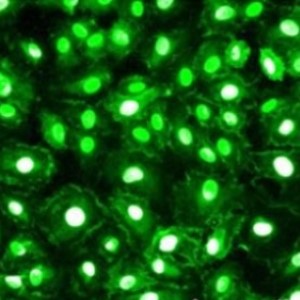
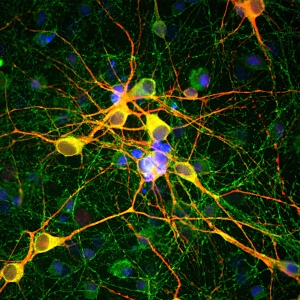
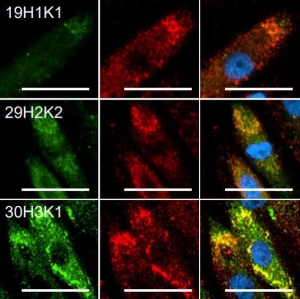
Image: BAX staining of Tonsil: Formalin-Fixed Paraffin-Embedded (FFPE).