
Catalog NumberSizePrice (USD)Shopping Cart
MO20037100 ul$175.00Buy Now | Add to Cart
 
Type: Mouse IgG
 
Applications: IHC
ICC=Immunocytochemistry; IF=Immunofluorescence; IHC=Immunohistochemistry; WB=Western blotting; FC=Flow Cytometry; IP=Immunoprecipitation; E=ELISA; NB=Neutralization of Bioactivity; FACS; FM=Fluorescent Micsroscopy; ; FPLC=Fast Protein Liquid Chromatography; GF=Gravity Flow; HPLC=High Performance Liquid Chromatography; TPE=Targeted Protein Expression; ; ; AC=Adherent Cell Assays; ; ; NAC=Non-adherent Cell Assays; ; ; BSC-CM5= Biacore Sensor Chip CM5; ;
Species Reactivity: H
B=Bovine; Ca=Cat; Ch=Chicken; D=Dog; EQ=Equine; GP=Guinea Pig; H=Human; M=Mouse; P=Porcine; Pr=Primate; R=Rat; Rb=Rabbit; Y=Yeast; Xe=Xenopus; Ze=Zebrafish; ; ; ; NA-Not Applicable; STP=Step-Tactin Proteins
Format: Protein G Purified - liquid
 
Immunogen: Prokaryotic recombinant fusion protein corresponding to the internal domain near the C-terminal end of the human Fas molecule.
 
Description/Data:
Picture

CD95, also known as FAS or APO1, is a 36 kDa cell surface type I membrane glycoprotein with an apparent molecular weight of 44 kDa on SDS PAGE. CD95 is a member of the TNF receptor family, which includes TNFR1, TNFR2, CD27, CD30 and CD40. Binding of CD95 Ligand to CD95 or crosslinking of CD95 by anti CD95 monoclonal antibodies leads to apoptosis of CD95 expressing cells. CD95 belongs to a subgroup of family members that have a death domain (DD) which contains 70 amino acids near the carboxyl terminal region of the molecule. The binding of adaptor molecules to this DD is responsible for transmitting the death signal for Apoptosis.

Stimulation of CD95 results in aggregation of its DD, leading to the recruitment of FADD and caspase 8 that together with the receptor form the death inducing signaling complex (DISC). CD95/CD95L is involved in the peripheral deletion of activated mature T cells at the end of the immune response and defects in this pathway predispose to autoimmune disorders. CD95 is also involved in killing of targets such as virus infected cells or cancer cells and killing of inflammatory cells at immune privileged sites.

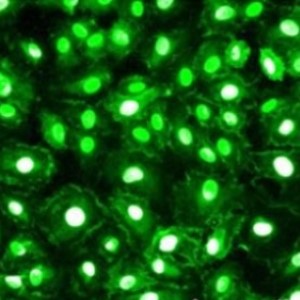
Image: FAS (CD95) staining of Human Intestine. Note membrane staining of absorptive epithelial cells. Paraffin section.