

Potent, Proven, and Ready to Use 3-D Models
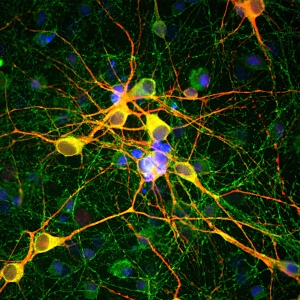
Neuromics offers Primary Human Cell Based Blood-Brain Barrier (BBB) and Human Umbilical Vein Endothelial Cell (HUVEC) Models.
These models are designed to study specific diseases. There are configured to mimic in-vivo like environments. We provide the cultured cells plates with 3-D inserts. The 3-D environments are optimized for cell growth in 3-D and ready to use for your drug discovery and toxicology assays.
Analytes tested by our customers include small molecules. compounds, proteins, antibodies, viruses, and bacteria.
Custom Models
Customers also use Neuro, Cancer-Associated Fibroblasts (CAFs), Cancer and iPSC-Derived Cells to manufacture organic, and micro-fluidic models.
Penetration study in 3D Human BBB Model
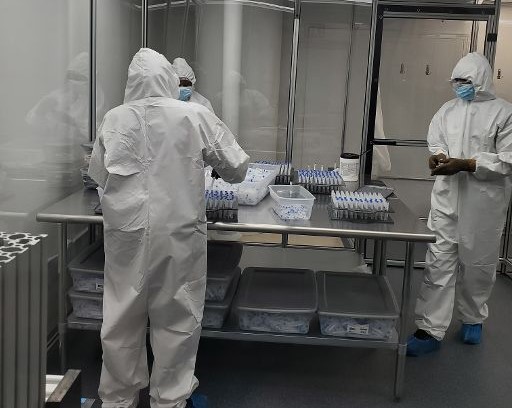
Primary Human Astrocyte and Human Umbilical Cell (HUVES) Organoids
Yvonne Adams, Anja T.R. Jensen (University of Copenhagen) manufactured Organioids using Neuromics' Primary Human Astrocytes and Human Brain Microvascular Endothelial Cells to study Plasmodium falciparum erythrocyte membrane protein 1 variants induce cell swelling and disrupt the blood–brain barrier in cerebral malaria.
Cerebral malaria (CM) is caused by the binding of Plasmodium falciparum–infected erythrocytes (IEs) to the brain microvasculature, leading to inflammation, vessel occlusion, and cerebral swelling.
Image 1: 3D BBB spheroids are composed of three different cell types. (A) FACS histogram showing pericytes (NG2, neural/glial antigen 2), astrocytes (GFAP, glial fibrillary acidic protein), and human cerebral microvascular endothelial cells (hCMEC/D3 and CD31).

Image2: ICAM-1–enriched microvilli and transmigratory ring/docking structures on brain hCMEC/D3 endothelial cells. (A–C) hCMEC/D3 brain endothelial cells were incubated with parasites.
This is first time the presence of intact, mature P. falciparum IEs within brain microvascular endothelial cells both in vitro and in vivo. The data on the enhanced binding and internalization of IEs suggest that the same approach will be necessary to counteract not only the effects of cytoadhesion but also the subsequent contribution to potentially lethal brain swelling in CM.

Studying the Tumor Microenvironment? You Need Our CAFs
With colorectal cancer (CRC) being one of the most prevalent cancers worldwide, understanding chemotherapy resistance in the CRC tumor microenvironment (TME) is an important goal. As we’ve seen in many other publications using our human cancer-associated fibroblasts (CAFs), CAFs play a huge role in the TME.
Our CAFs have been used in a handful of studies in 2D and 3D TME models, where they demonstrate their ability to complicate treatment objectives. Overall, the mechanisms by which CAFs contribute to chemotherapy resistance in the TME are poorly understood.
Image: DKK1 expression in Neuromics colorectal CAFs when subjected to chemotherapeutic agents.
Researchers from the University of Kentucky utilized our colorectal CAFs (cat. CAF115) in a new paper examining these mechanisms. In their cell models, they found that CAFs secrete DKK1, a protein associated with tumor growth and metastasis, when subjected to chemotherapy treatments for CRC. Their results identified CAF-secreted DKK1 as a major player in resistance to treatment. Furthermore, they recommend looking into treatments that target DKK1 to counteract chemotherapy resistance.
You can check out the full paper here.

As mentioned, our CAFs have a long history of being utilized to study the TME. A growing trend we're seeing is the use of these cells in 3D models. Our colorectal, pancreatic, breast, and ovarian CAFs have all been used in 3D TME models in recent publications.
We have a large selection of CAFs, including around a dozen types of normal CAFs and several hTERT immortalized CAFs. Check them all out below.
| Name | Catalog # | Type | Species | Applications | Size | Price |
|---|---|---|---|---|---|---|
| Human Breast CAFs | CAF116 | Human Primary CAFs | Human | Cell Assays | 1,000,000 cells | $2,792.88 |
| Human Bronchial CAFs | CAF111 | Human Primary CAFs | Human | Cell Assays | 1,000,000 Cells | $3,078.00 |
| Human Colorectal Tumor CAFs | CAF115 | Human Primary CAFs | Human | Cell Assays | 1,000,000 cells | $1,294.92 |
| Human Kidney CAFs | CAF110 | Human Primary CAFs | Human | Cell Assays | 1,000,000 Cells | $3,078.00 |
| Human Liver CAFs | CAF113 | Human Primary CAFs | Human | Cell Assays | 1,000,000 Cells | $3,078.00 |
| Human Lung Adenocarcinoma CAFs | CAF117 | Human Primary CAFs | Human | Cell Assays | 1,000,000 cells | $1,294.92 |
| Human Lung Squamous Cell Carcinoma CAFs | CAF117S | Human Primary CAFs | Human | Cell Assays | 1,000,000 Cells | $3,078.00 |
| Human Metastatic Ovarian CAFs | CAF114 | Human Primary CAFs | Human | Cell Assays | 1,000,000 Cells | $3,078.00 |
| Human Ovarian CAFs | CAF112 | Human Primary CAFs | Human | Cell Assays | 1,000,000 Cells | $3,078.00 |
| Human Pancreatic CAF-Stellate Cells | CAF118 | Human Primary CAFs | Human | Cell Assays | 1,000,000 Cells | $2,656.80 |
| Human Prostate CAFs | CAF119 | Human Primary CAFs | Human | Cell Assays | 1,000,000 Cells | $3,078.00 |
| Immortalized Human Colorectal Tumor CAFs | CAF115-IM | Human Primary CAFs | Human | Cell Assays | 1,000,000 cells | $7,018.92 |
| Immortalized Human Kidney CAFs | CAF110-IM | Human Primary CAFs | Human | Cell Assays | 1,000,000 cells | $9,536.40 |
| Immortalized Human Lung Adenocarcinoma CAFs | CAF117-IM | Human Primary CAFs | Human | Cell Assays | 1,000,000 cells | $7,018.92 |
| Immortalized Human Lung Squamous Cell Carcinoma CAFs | CAF117S-IM | Human Primary CAFs | Human | Cell Assays | 1,000,000 Cells | $9,536.40 |
| Immortalized Human Ovarian CAFs | CAF112-IM | Human Primary CAFs | Human | Cell Assays | 1,000,000 Cells | $9,536.40 |
| Immortalized Human Pancreatic CAFs | CAF118-IM | Human Primary CAFs | Human | Cell Assays | 1,000,000 cells | $8,596.80 |
Create In-Vivo Like Tumor Models With Our CAFs
When researchers employ our human primary cancer associated fibroblasts (CAFs) in their tumor microenvironment models, they consistently find stark differences between 2D and 3D. Through 3D co-culture, investigators recognize that their models mirror in vivo tumors more closely than in 2D.
This makes our CAFs invaluable, enabling drug discovery research that better mimics the tumor microenvironment. Furthermore, over the last few years, we've seen the observation across many of our CAF types, including pancreatic, colorectal, breast, and now, ovarian.
Image: Human ovarian cancer cell lines (SKOV3 and OVACR8) along with Neuromics ovarian CAFs (cat. CAF112) in 2D and 3D ovarian cancer models.
Earlier this month, researchers from Taiwan utilized our Ovarian CAFs (cat. CAF112) to create a 3D ovarian cancer tumor microenvironment model. By integrating CAFs in their 3D model, the researchers found that it better exemplified the in vivo tumor microenvironment than 2D culture or models without CAFs.
Increased tumorigenicity and chemoresistance were observed in the 3D sphere model with CAFs compared to 2D co-culture models. These results help validate their model as a good representation of the tumor microenvironment and one of value to research therapeutic approaches. You can read the full paper here.
Bottom image: Formalin-fixed paraffin-embedded tumor sections stained with various markers with or without integration of ovarian cancer spheres with or without CAFs.
Neuromics offers a wide selection of CAFs, with nearly a dozen types of normal CAFs. Furthermore, we have hTERT immortalized many types, making those options also available. Check them all out below.
| Name | Catalog # | Type | Species | Applications | Size | Price |
|---|---|---|---|---|---|---|
| Human Breast CAFs | CAF116 | Human Primary CAFs | Human | Cell Assays | 1,000,000 cells | $2,792.88 |
| Human Bronchial CAFs | CAF111 | Human Primary CAFs | Human | Cell Assays | 1,000,000 Cells | $3,078.00 |
| Human Colorectal Tumor CAFs | CAF115 | Human Primary CAFs | Human | Cell Assays | 1,000,000 cells | $1,294.92 |
| Human Kidney CAFs | CAF110 | Human Primary CAFs | Human | Cell Assays | 1,000,000 Cells | $3,078.00 |
| Human Liver CAFs | CAF113 | Human Primary CAFs | Human | Cell Assays | 1,000,000 Cells | $3,078.00 |
| Human Lung Adenocarcinoma CAFs | CAF117 | Human Primary CAFs | Human | Cell Assays | 1,000,000 cells | $1,294.92 |
| Human Lung Squamous Cell Carcinoma CAFs | CAF117S | Human Primary CAFs | Human | Cell Assays | 1,000,000 Cells | $3,078.00 |
| Human Metastatic Ovarian CAFs | CAF114 | Human Primary CAFs | Human | Cell Assays | 1,000,000 Cells | $3,078.00 |
| Human Ovarian CAFs | CAF112 | Human Primary CAFs | Human | Cell Assays | 1,000,000 Cells | $3,078.00 |
| Human Pancreatic CAF-Stellate Cells | CAF118 | Human Primary CAFs | Human | Cell Assays | 1,000,000 Cells | $2,656.80 |
| Human Prostate CAFs | CAF119 | Human Primary CAFs | Human | Cell Assays | 1,000,000 Cells | $3,078.00 |
| Immortalized Human Colorectal Tumor CAFs | CAF115-IM | Human Primary CAFs | Human | Cell Assays | 1,000,000 cells | $7,018.92 |
| Immortalized Human Kidney CAFs | CAF110-IM | Human Primary CAFs | Human | Cell Assays | 1,000,000 cells | $9,536.40 |
| Immortalized Human Lung Adenocarcinoma CAFs | CAF117-IM | Human Primary CAFs | Human | Cell Assays | 1,000,000 cells | $7,018.92 |
| Immortalized Human Lung Squamous Cell Carcinoma CAFs | CAF117S-IM | Human Primary CAFs | Human | Cell Assays | 1,000,000 Cells | $9,536.40 |
| Immortalized Human Ovarian CAFs | CAF112-IM | Human Primary CAFs | Human | Cell Assays | 1,000,000 Cells | $9,536.40 |
| Immortalized Human Pancreatic CAFs | CAF118-IM | Human Primary CAFs | Human | Cell Assays | 1,000,000 cells | $8,596.80 |
Tumor Microenvironment Research Demands Our CAFs
Just how important is the tumor microenvironment (TME) in cancer research? As a supplier of primary human cancer-associated fibroblasts (CAFs), we’re exposed to plenty of studies looking into their role. One big theme: it’s becoming ever clearer that cancer treatments must take CAFs and their role in the TME into account.
Image: 3D organotypic colorectal tumor model surrounded by CAFs (vimentin, green) (a). Organoids are larger and more plentiful when CAFs are incorporated than without CAFs (b & c).
In a newly released paper, a team of researchers from the University of Akron builds 3D organoids with patient-derived colorectal tumor samples to study prospective cancer treatments. They compare how organoids develop, prosper, and react to treatments when they are with and without colorectal tumor CAFs (cat. CAF115) provided by Neuromics.
Some of the findings:
- When CAFs are mixed with colorectal tumor cells, they promote larger and an increased number of tumor organoids.
- Gene expression in tumor cells changes dramatically when mixed with CAFs, as CAFs activate various pathways.
- Hepatocyte growth factor (HGF) secreted by CAFs activates MET receptors in patient-derived tumor cells. The activation promotes proliferation and stemness in cancer cells.
- The presence of CAFs in the organoids made treatments less effective, as CAFs enable drug resistance in cancer.
- This tumor model has the potential to be used with individualized patient samples for custom treatments.
Check out the full paper here: https://aacrjournals.org/mct/article/doi/10.1158/1535-7163.MCT-24-0756/760710
Bottom Image: Heatmap of gene expression in colorectal tumor organoids shows changes with or without CAFs. Each row represents a gene, each column a sample, and every cell shows normalized gene expression values.
This study is just one of several recent papers utilizing Neuromics CAFs to better understand the TME. Australian researchers used our pancreatic CAFs (cat. CAF118) to see how they react to small extracellular vesicles released by pancreatic cancer cells (learn more). Collaborating investigators from Takeda, BioTuring, and BMS also employed our Pancreatic CAFs in 2D and 3D monocultures and cocultures. They found that the expression profile and pro-proliferative effects of CAFs vary substantially depending on the culture conditions (check out our blog post).
You can explore all our human CAF options here: https://www.neuromics.com/fibroblasts-cafs-cancer-cells
HUVECS in 3-D Action
Form Vascular Networks in Microfluidics Model
In this study, the authors developed a 3D functional human microvascular network in a microfluidic device. The established model enables Neuromics GFP-labeled human umbilical vein endothelial cellsto form vessel-like microtissues and have physiological functions which are closer to cells in human blood vessels. The perfusable microvasculature allows the delivery of nutrients, and oxygen, as well as flow-induced mechanical stimuli into the luminal space of the endothelium. The microflow effectively mimic the blood flow in human vessels.

This in-vivo like model is then used for toxicity assays-Yan Li, Qing-Meng Pi, Peng-Cheng Wang, Lie-Ju Liu, Zheng-Gang Han,Yang Shao, Ying Zhai, Zheng-Yu Zuo, Zhi-Yong Gong, Xu Yang and Yang Wu. Functional human 3D microvascular networks on a chip to study the procoagulant effects of ambient fine particulate matter. : RSC Adv., 2017, 7, 56108
Our human primary and stem cells are widely used and frequently published. We will continue to post relevant results from researchers using the cells here.
Images: Microvascular network formation based on microfluidic 3D HUVEC culture. (A) Schematic diagram of a microfluidic device. (B) Schematic diagram of microvascular network formation based on microfluidic 3D HUVEC culture. (C) Schematic diagram of loading microparticles in microvascular networks. (D) Microscope image of HUVECs seeding in fibrin hydrogel. (E) Confocal microscope image of fluorescent microvascular networks
Blood-Brain Barrier Publication
As always, Neuromics greatly appreciates when our products are used in publications. The most recent publication shared by customers took advantage of our mouse Tuj-1 antibody (Cat.#MO15013). In this publication, researchers describe how they created an ex vivo 3D vascularized neural constructs that mimics the function of the blood-brain barrier.
Image: The neurovascular interface containing Tuj1+ (green) neurons differentiated from NSCs (in spaces surrounding the vasculature network) and Claudin-5+ (red) endothelial cells (inside the microfluidic channels). Scale bar, 500 μm. Image citation below
Citation:
Haibing Yue, Kai Xie, Xianglin Ji, Bingzhe Xu, Chong Wang, and Peng Shi. (2020). Vascularized Neural Constructs for Ex-Vivo Reconstitution of Blood-Brain Barrier Function. Biomaterials. doi: 10.1016/j.biomaterials.2020.119980
Learn more...

In addition to our Tuj-1 antibody used in this publication, Neuromics offers a wide selection of antibodies ideal for BBB research. Check them out here!
Image: Spatial distribution of neurons (Tuj1+, green) in the 3D neural construct mimicking the in vivo BBB. The gray dash lines indicated the interfaces of collagen and tubal networks. Citation same at the above image


