



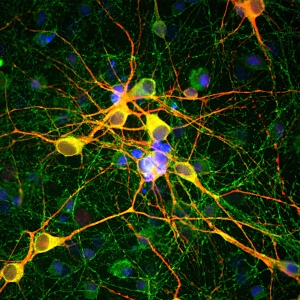
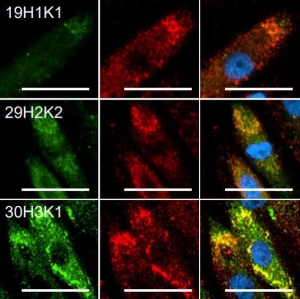

Transcription factors are involved in gene regulation, turning on and off the expression of certain genes in cells. Their DNA-binding domains allow them to bind to specific sequences of DNA, a distinct feature. By regulating the expression of genes in different cell types and during development, transcription factors direct cell division, cell growth, and cell death. Our selection of transcription factor antibodies includes antibodies in the following family: FOX, HIFs, SOX, and bHLH.
- HIFs
Hypoxia contributes significantly to the pathophysiology of major categories of human disease, including myocardial and cerebral ischemia, cancer, pulmonary hypertension, congenital heart disease and chronic obstructive pulmonary disease
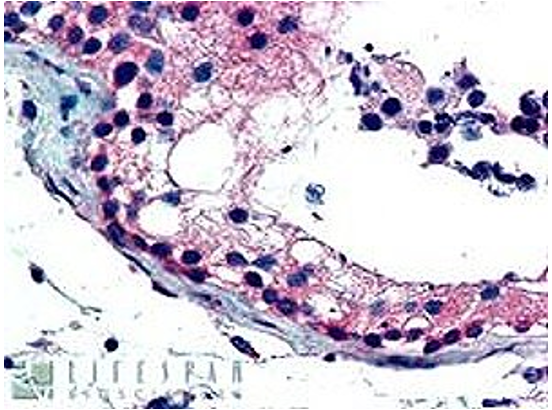
HIFs (Hypoxia-inducible factors) respond to changes in available oxygen, especially hypoxia. They are critical for mainting oxygen homeostasis and preventing hypoxia. They are also vital to development. In mammals, deletion of the HIF-1 genes results in perinatal death. HIF-1 has been shown to be vital to chondrocyte survival, allowing the cells to adapt to low-oxygen conditions within the growth plates of bones.
Name Catalog # Type Species Applications Size Price Factor Inhibiting HIF-1/FIH RA25046 Rabbit IgG Mouse, Rat ICC, WB, IHC 100 ul $409.00 - SOX
The developmentally important Sox family has no singular function, and many members possess the ability to regulate several different aspects of development. While many Sox genes are involved in sex determination, some are also important in processes such as neuronal development. For example, Sox2 and Sox3 are involved in the transition between epithelial granule cells in the cerebellum to their migratory state. Granule cells then differentiate to granule neurons, with Sox11 being involved in this process. It is thought that some Sox genes may be useful in the early diagnosis of childhood brain tumours due to this sequential expression in the cerebellum, making them a target for significant research