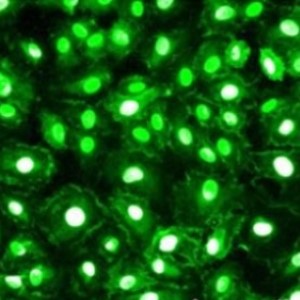

Researchers at UK Dementia Research and Brain Sciences Institute, Imperial College London, London, UK used Neuromics' Human Brain Microvascular Endothelial Cells (HBMVECS or BECS) to study gene expression in Cerebral small vessel disease, and Alzheimer's disease.
In short, Cerebral small vessel disease (SVD) often coexists with Alzheimer’s disease (AD), and brain endothelial cells (BECs) express genes associated with AD risk. To examine how genetic risk intersects with neurovascular cell regulation, we mapped gene regulomes across human BECs, mural cells, and other brain cell types. We found that AD heritability is predominantly immune related, with modest enrichment in BECs.
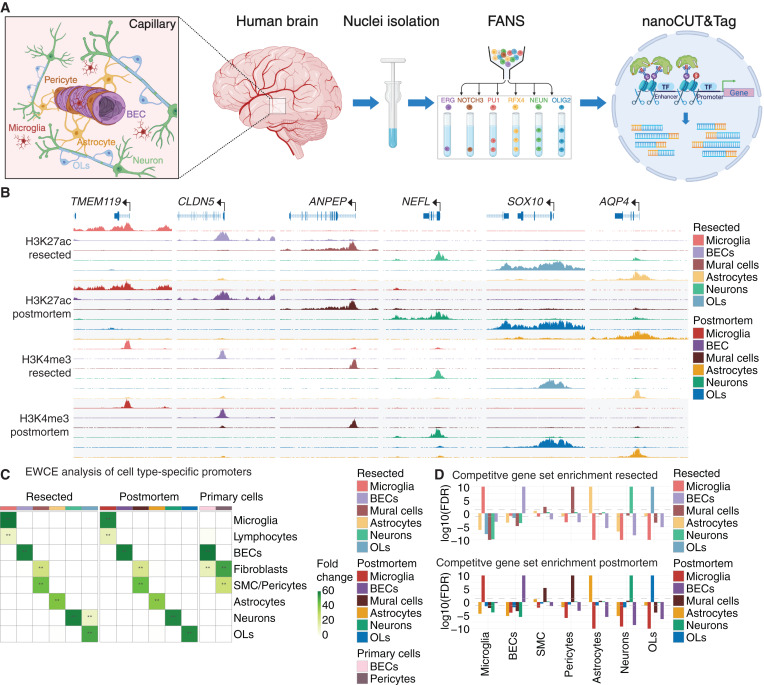
Image: (A) Schematic of nuclei isolation and epigenomic profiling of brain cell types from resected and post-mortem cortical samples. (B) UCSC genome browser visualization of H3K27ac and H3K4me3 CUT&Tag at cell-type-specific marker gene loci.(C) EWCE analysis of cell-type-specific promoters for resected and post-mortem brain cell types and for primary pericytes and BECs in brain single-cell gene expression.5∗Benjamini-Hochberg-corrected q < 0.05; ∗∗Benjamini-Hochberg-corrected q = 0. (D) CAMERA analysis of cell-type annotations from brain single-cell gene expression5 using differential promoters from resected and post-mortem brain cell types.
Their important findings demonstrate a genetic rationale for drug prioritization. Importantly, the results present targets and potential avenues for therapeutic intervention in AD and SVD, which have the potential to lower dementia risk.