
Yvonne Adams, Anja T.R. Jensen (University of Copenhagen) manufactured Organioids using Neuromics' Primary Human Astrocytes and Human Brain Microvascular Endothelial Cells to to study Plasmodium falciparum erythrocyte membrane protein 1 variants induce cell swelling and disrupt the blood–brain barrier in cerebral malaria.
Cerebral malaria (CM) is caused by the binding of Plasmodium falciparum–infected erythrocytes (IEs) to the brain microvasculature, leading to inflammation, vessel occlusion, and cerebral swelling.
Image 1: 3D BBB spheroids are composed of three different cell types. (A) FACS histogram showing pericytes (NG2, neural/glial antigen 2), astrocytes (GFAP, glial fibrillary acidic protein), and human cerebral microvascular endothelial cells (hCMEC/D3 and CD31).
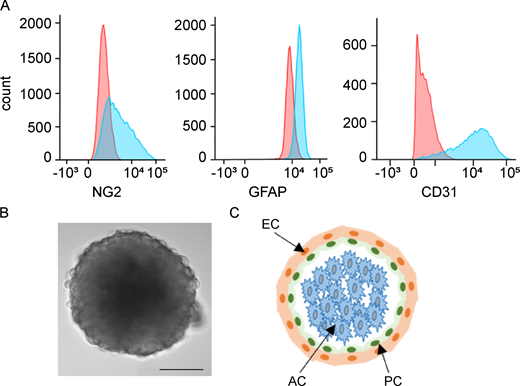
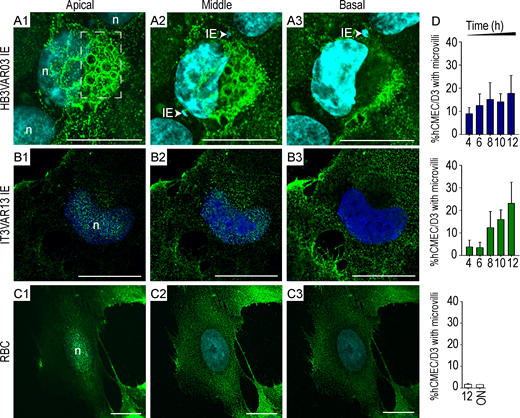
Image2: ICAM-1–enriched microvilli and transmigratory ring/docking structures on brain hCMEC/D3 endothelial cells. (A–C) hCMEC/D3 brain endothelial cells were incubated with parasites.
This is first time the presence of intact, mature P. falciparum IEs within brain microvascular endothelial cells both in vitro and in vivo. The data on the enhanced binding and internalization of IEs suggest that the same approach will be necessary to counteract not only the effects of cytoadhesion but also the subsequent contribution to potentially lethal brain swelling in CM.